Start here: tap the TLP logo
anytime to return home.TLP logo
anytime to return home.TLP logo
Choose what you want to view
or which section you want to read.sport sections
or which section you want to read.sport sections
College football does not give programs a soft landing in 2026. Here are the five hires — and the five questions — that will define the season.
Browser voice · ready when you are
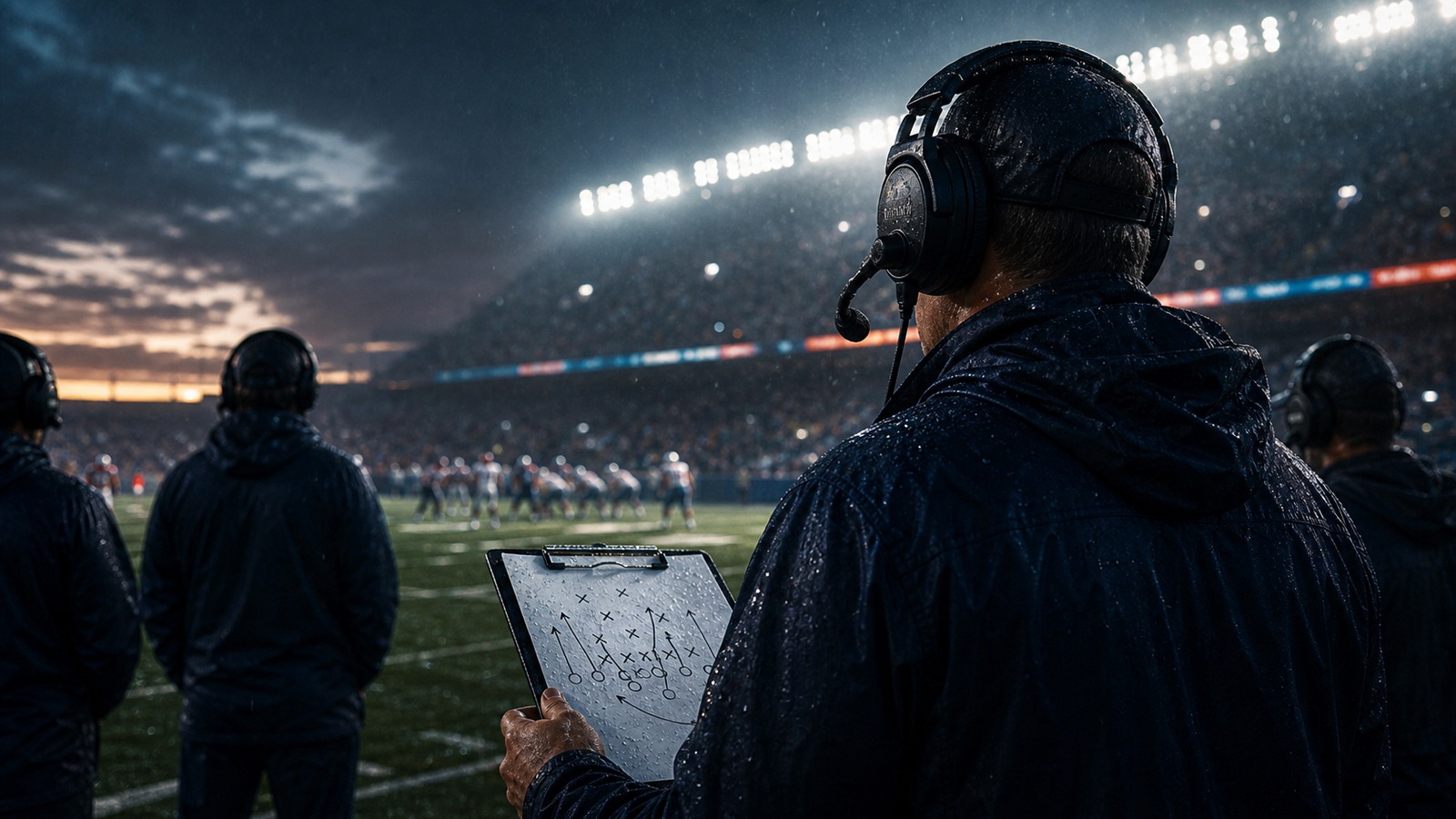
College football does not give programs a soft landing in 2026.
Every athletic director who made a head coaching change this offseason understood the brief: the transfer portal has compressed timelines, the playoff field has expanded the ceiling, and the margin for a slow build has narrowed to almost nothing. You hire someone who can move fast, carry a roster with him, and win before the seat gets warm.
The five hires below are not all the same. Some are reclamation jobs. Some are elevation plays. One is a program betting everything on a name it has wanted for years. What they share is consequence. These coaches — and the decisions they make in the first 18 months — will shape what college football looks like by the time the 2026 CFP bracket fills out.
Virginia Tech did not hire James Franklin to rebuild. They hired him to reload.
Franklin spent 12 years at Penn State turning a program that had been fractured by the Sandusky scandal into a perennial Big Ten contender. He knows how to recruit nationally, how to retain a staff, and how to win in November. He also knows how to move a roster — and that is exactly what he did coming in. Franklin brought his two-deep with him from Penn State, which tells you everything about his read on what Virginia Tech needed. He did not trust what was here. He trusted what he built.
The philosophical question for Franklin at Virginia Tech is whether that Penn State identity — physical, process-driven, built on the lines — translates to the ACC landscape. The recruiting footprint in the DMV and mid-Atlantic gives him every reason to believe it does. The early schedule will tell us whether the roster he carried in is ready to compete at that level immediately.
Virginia Tech hired a builder operating at the height of his confidence. The expectation is production now.
The debate about how Lane Kiffin left Ole Miss will follow him to Baton Rouge. He left mid-run — didn’t coach the Rebels in the College Football Playoff after an 11-1 regular season — and landed a seven-year deal in one of the largest markets in college football. That choice will be relitigated every time LSU loses.
What will not be questioned is what he is building.
Kiffin’s offensive identity — tempo, spacing, the ability to make a receiver look like a weapon — fits the SEC’s modern arms race precisely. At Ole Miss he built with a constrained market and still produced results that earned him this job. At LSU, the market is different. The NIL apparatus is different. The brand recognition when recruiting five-stars is different.
The early schedule is brutal: Clemson, Ole Miss, Texas A&M. (Source: LSU Athletics 2026 Schedule — Clemson Sept. 5, at Ole Miss Sept. 19, Texas A&M Sept. 26) That is not a soft landing. That is a program telling a new coach exactly what the standard is. Kiffin has been in this position before — high expectations, unforgiving schedule, a fanbase that has seen enough to know what a real team looks like. The difference now is that he is not managing down expectations. He is building up to meet them.
Annual playoff appearances are the stated expectation. That is the contract.
Nobody in college football has built more with less than Kyle Whittingham.
He spent two decades at Utah turning a mid-major program into a program that beat USC, went to the Rose Bowl, and competed with the Pac-12’s best every year. He did it without the recruiting profile of the Big Ten powers, without the NIL infrastructure, without the brand. He did it through player development, defensive identity, and a culture that did not depend on five-star rosters to function.
Michigan hired him to stabilize. After the fallout from the sign-stealing scandal and a program that had slipped in recruiting credibility and roster cohesion, the Wolverines needed exactly what Whittingham represents: a head coach whose program never loses itself.
The early signal that matters: Whittingham convinced star quarterback Bryce Underwood to return. (Source: CBS Sports) That is not a minor thing. Underwood had options. Underwood chose to stay. That is a vote of confidence in the coaching staff before a single game has been played, and it buys Michigan the most important thing a new staff can have — time with a quarterback who knows the system and can make everyone around him better.
Whittingham has never coached at a program with Michigan’s resources. The question is not whether he can coach. The question is whether what he built at Utah scales.
Oklahoma State went 1-11. That is not a rough season. That is a program in freefall.
Eric Morris is not a brand name. He did not come with the kind of résumé that generates national headlines or makes recruiting easier in the first phone call. What he came with was a plan. He brought 54 transfers with him (Source: ESPN, OSU roster overhaul — 54 portal commitments as of Jan. 9, 60 total in portal cycle) and installed quarterback Drew Mestemaker out of North Texas as the centerpiece of his offense. That is not tinkering. That is a full reconstruction, executed in one offseason.
Morris made his name as an offensive coordinator — a play-caller who can put points on the board and keep a quarterback operating in rhythm. Oklahoma State’s problems in 2025 were not exclusively offensive, but a program that has lost its identity needs a clear signal of what it is going to be. Morris is providing that signal. The offense will be the identity.
The turnaround timeline is the real question. You can paper over 1-11 with transfers and a new quarterback and still lose eight games if the culture has not caught up with the roster. Morris has to win the room before he wins the game. The transfer haul says he understands the urgency. What happens in the first six weeks of the season will tell us whether he is reading the moment correctly.
California is playing in the ACC now. That is a different football environment than the Pac-12 — tighter roster margins, different travel demands, a recruiting landscape that requires a new map. The Bears hired Tosh Lupoi to navigate the transition.
Lupoi built his reputation as one of the best defensive recruiters in the country — Alabama, Georgia, the elite recruiting rooms of the SEC. That background matters at a program like Cal, where the recruiting pitch has historically been the academics, the market, the development track. Lupoi adds something those pitches never had: a defensive culture built at the highest level.
The decision that tells you the most about where this is headed: Lupoi retained quarterback Jaron-Keawe Sagapolutele. The portal in 2026 can swallow a young quarterback before he ever takes a meaningful snap. The fact that Sagapolutele is still in Berkeley under a new staff means someone in that building sold him on the future. That is a recruiting win that does not show up on a national signing day board, but it matters as much as anything that does.
Cal is not expected to compete for the ACC title in year one. But how Lupoi handles the transition — how he recruits the West Coast in a conference built on East Coast footprints, how he develops the defensive identity — will determine whether this is a program that finds a legitimate lane or simply absorbs the geography change and stays where it was.
Five hires. Five different contexts. But the through line is this: every one of these athletic directors hired a coach with a clear idea of what the program needed to become — and every one of these coaches arrived with a plan that assumed they would not get a grace period.
Franklin brought the roster. Kiffin brought the brand. Whittingham brought the culture. Morris brought the reconstruction. Lupoi brought the recruiting pedigree.
The 2026 season will tell us which of those ingredients was the right prescription for the moment. That is the thing about coaching hires — the decision looks smart or reckless entirely based on what happens next.
Watch these five. They are the architects.
TLP Sports Club — The Architect covers coaching decisions, staff construction, and situational philosophy across all levels. Subscribe to TLP Sports Club on YouTube, join the newsletter, and find us in the community.
Disclaimer: TLP Sports Club employs AI agents in our publications. We follow a rigorous editorial standard — sourcing, verification, and human review before any piece publishes. Even so, AI, like the humans who edit it, can make mistakes. We trust our readers to check the sources cited here for themselves. If you find an error, tell us. We will correct it.
You're one of our first visitors. This site is still under development — if you spot anything off, please let us know. Your eyes help us build something great.
Your feedback and this page’s address are sent to TLP Sports Club using Google Forms. Privacy Policy
Fan Discussion
Choose a display name and join the conversation. No GitHub sign-in.