The offense
Browser voice · ready when you are
The offense is the team with the ball.
The offense is the team with the ball, and it has eleven players on the field for every snap. Each position has a specific job, and the positions break into three groups: the skill players who handle the ball, the offensive line that protects them, and the tight end who does both.
The offense is the team with the ball.
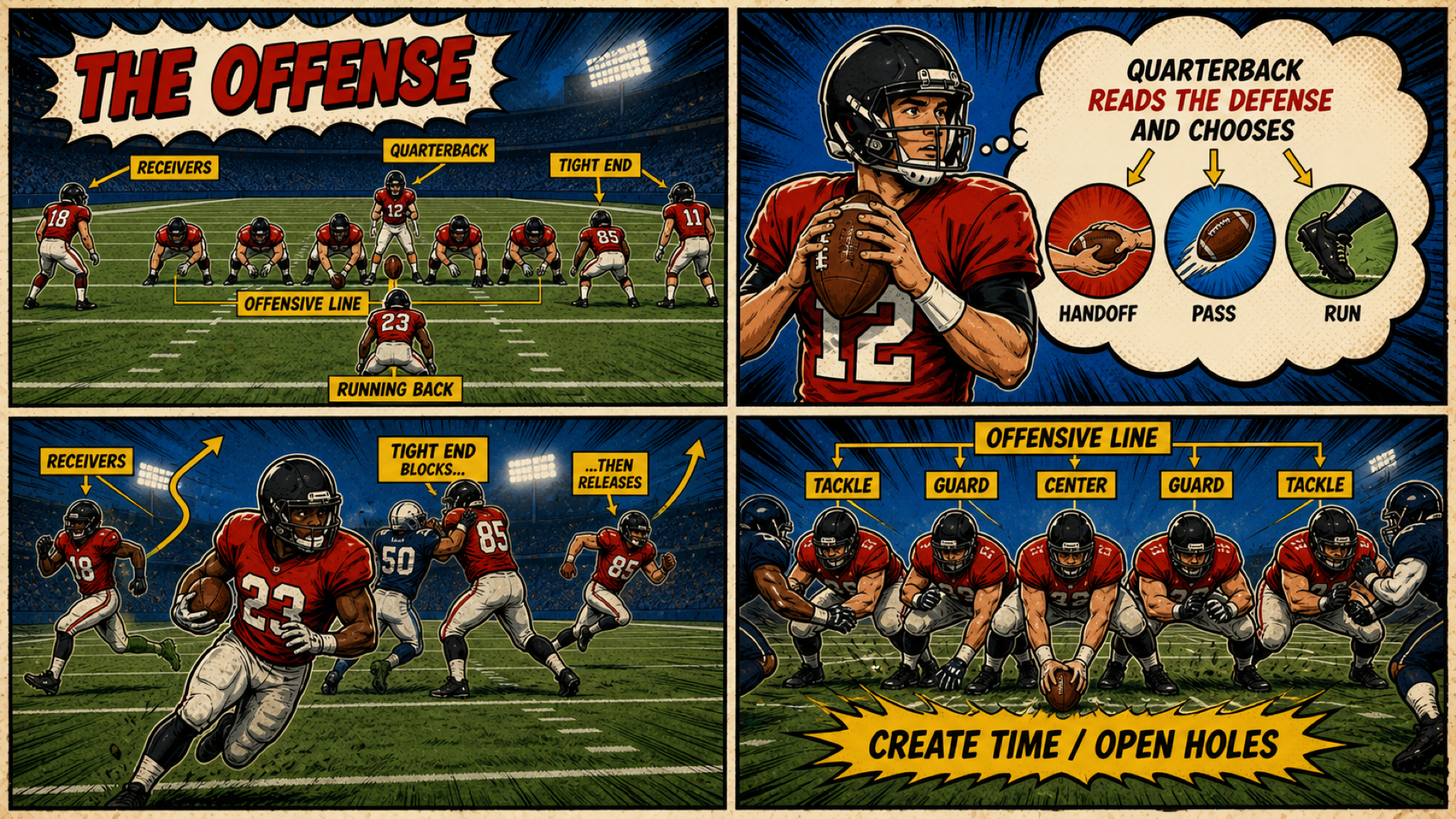
The offense is the team with the ball. Eleven players are on the field for every snap, and each position has a specific job.
The quarterback is the leader of the offense.
The quarterback is the leader of the offense. He takes the snap from the center, reads the defense, and decides whether to hand the ball to a runner, throw it to a receiver, or run it himself. Every offensive play flows through the quarterback.
The running back lines up behind or beside the quarterback.
The running back lines up behind or beside the quarterback. His primary job is to carry the ball on running plays. He may also catch short passes out of the backfield or stay in to block for the quarterback.
Wide receivers line up near the sidelines and run routes — specific patterns designed to…
Wide receivers line up near the sidelines and run routes — specific patterns designed to get open. The quarterback throws the ball to the spot where the receiver will be. Most formations use two or three wide receivers.
The tight end is a hybrid player who lines up on the line of scrimmage next to the offens…
The tight end is a hybrid player who lines up on the line of scrimmage next to the offensive tackles. He blocks like a lineman on running plays and runs routes like a receiver on passing plays. The best tight ends create mismatches because they are too big for defensive backs and too fast for linebackers.
The offensive line is five players: center, two guards, and two tackles.
The offensive line is five players: center, two guards, and two tackles. The center snaps the ball to the quarterback and makes blocking calls. The guards block interior defenders. The tackles handle edge rushers — the left tackle protects the quarterback’s blind side, which is why it is one of the highest-paid positions in football.
The offensive line does not carry or catch the ball.
The offensive line does not carry or catch the ball. They create time for the quarterback to throw and open holes for the running back to run through. The offense does not function without them.
Read the full answer
The offense is the team with the ball. Eleven players are on the field for every snap, and each position has a specific job.
The quarterback is the leader of the offense. He takes the snap from the center, reads the defense, and decides whether to hand the ball to a runner, throw it to a receiver, or run it himself. Every offensive play flows through the quarterback.
The running back lines up behind or beside the quarterback. His primary job is to carry the ball on running plays. He may also catch short passes out of the backfield or stay in to block for the quarterback.
Wide receivers line up near the sidelines and run routes — specific patterns designed to get open. The quarterback throws the ball to the spot where the receiver will be. Most formations use two or three wide receivers.
The tight end is a hybrid player who lines up on the line of scrimmage next to the offensive tackles. He blocks like a lineman on running plays and runs routes like a receiver on passing plays. The best tight ends create mismatches because they are too big for defensive backs and too fast for linebackers.
The offensive line is five players: center, two guards, and two tackles. The center snaps the ball to the quarterback and makes blocking calls. The guards block interior defenders. The tackles handle edge rushers — the left tackle protects the quarterback’s blind side, which is why it is one of the highest-paid positions in football.
The offensive line does not carry or catch the ball. They create time for the quarterback to throw and open holes for the running back to run through. The offense does not function without them.
Swipe, drag, or use the arrows to turn the page.
See it in motion when the video is ready.
Plain Text and the Comic Book Illustrated Answer are available now. Video stays part of the same answer box, so the experience can grow without changing how people learn.